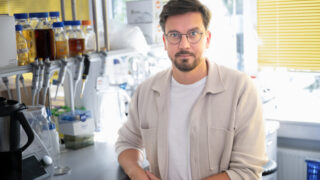
Food tech and bioengineering

Members

Head of the research team

Publications

Journal / Periodical: SSRN Working Paper Series
Authors: Thirumal Muthu, Kannan; Ojangu, Eve-Ly; Zovo, Kairit; Jõul, Piia; Illarionov, Aleksandr; Ho, Thi Thuy Tran; Risti, Robert; Karpichev, Yevgen; Lukk, Tiit; Lahtvee, Petri-Jaan
Year: 2026
Journal / Periodical: bioRxiv
Authors: Hamacek, Henrique Sepúlveda Del Rio; Butelmann, Tobias; Ostertag, Katharina; Joasoon, Kerit-Lii; Tingajeva, Oksana; Jõul, Piia; Lahtvee, Petri-Jaan; Shastri, V. Prasad; Kumar, Rahul
Year: 2026
Journal / Periodical: ChemRxiv
Authors: Sepúlveda Del Rio Hamacek, Henrique; Daily, Shannon; Le, LeAnn; Khalid, Sadia; Spuul, Pirjo; Lahtvee, Petri-Jaan; Nelson, Alshakim; Kumar, Rahul
Year: 2026

Projects

Year: 2025 - 2029
Wood is Estonia's most important bio-based raw material, the skilful processing of which creates high added value, carbon binding products. Today, Estonian universities do not have a unified action plan and infrastructure for coordinated research and development (R&D) and for offering industrial solutions throughout the entire value chain. Therefore, the infrastructure is created for linking 14 structural units of 8 institutes of 3 universities. This synergy enables to carry out interdisciplinary, high quality R&D activities of wood valorisation. The infrastructure creates new opportunities for training young researchers and provides a strong base for international cooperation. An integrated contact point will be created for effective marketing of services of the infrastructure. R&D of the infrastructure covers mechanical, chemical, biochemical and thermochemical valorisation of primary and secondary wood and can take the Estonian wood science and industry to a new development level.
Year: 2023 - 2029
DigiBio project focuses on digitalisation, bioeconomy, and sustainability, scientific domains which constitute a high priority in national, regional, and EU strategies and policies. As the second large European Centre within this area, the Estonian Centre for Bioesustainability (ECB) will place Estonia in a very competitive position in European R&I. With DTU assistance, ECB will establish a major research, technology development, and innovation platform for the generation of cutting-edge bioengineering solutions focused on sustainable bio-production through biology digitalisation. This platform will accelerate lab-to-market translation of bioengineering solutions, diversifying Estonian national industry. DigiBio’s overarching objective is to establish a state-of-the-art CoE for digitalisation of biology in Estonia, through upgrading the ECB.
Year: 2023 - 2027
Sustainable aviation fuels (SAF) are the only short-term alternative to fossil fuels in aviation. Considering the increased number of passengers forecasted in the near future, a massive increased in SAF production has been estimated in the years to come. To fulfill this increase in demand, the combination of existing and new renewable production chains is needed. Current SAF-producing pathways are at different levels of maturity, implementation or even commercialization. However, lowering the cost and supply chain development are key challenges for commercial-scale SAF deployment. Using biowastes as feedstock for SAF is challenging but necessary to make SAF competitive with fossil fuels. In this context, yeasts may be key players to generate economically-viable SAF intermediates (terpenes or fatty acids (FA)) in an environmentally-friendly way from biowaste. This SAF production by biological means is very new and presents a lot of remaining challenges and training gaps that have to be addressed. YAF research programme aims at; i) producing carbon sources from biowastes, ii) developing new yeast cell factories to produce SAF, iii) designing new bifunctional catalysts, iv) achieving efficient strategies for FA/terpenes extraction, and v) creating robust framework tailored to the scaling-up methodologies and life-cycle sustainability assessment of different SAF producing routes, which will support decisionmaking. To achieve this, the right integration of biology, biotechnology, chemical engineering and environmental sciences will be required. Thus, the prime training/networking aim of YAF is to train the next generation of researchers in a highly interdisciplinary and intersectorial research environment such that they can soundly address upcoming challenges concerning production yeastbased SAF. YAF has been designed to strengthen European research and innovation, enhancing research visibility and generating a critical mass to address European (and global) challenges

Recognitions

Foundations in Healthy Ageing Award
2020
The High-Level Scientific Stays (SSHN) Grant-Campus France.
2020
Bioinnovation days: Elisa Eesti challenge award
2019